
Modern Interior Railing Trends for Luxury Homes
March 3, 2026


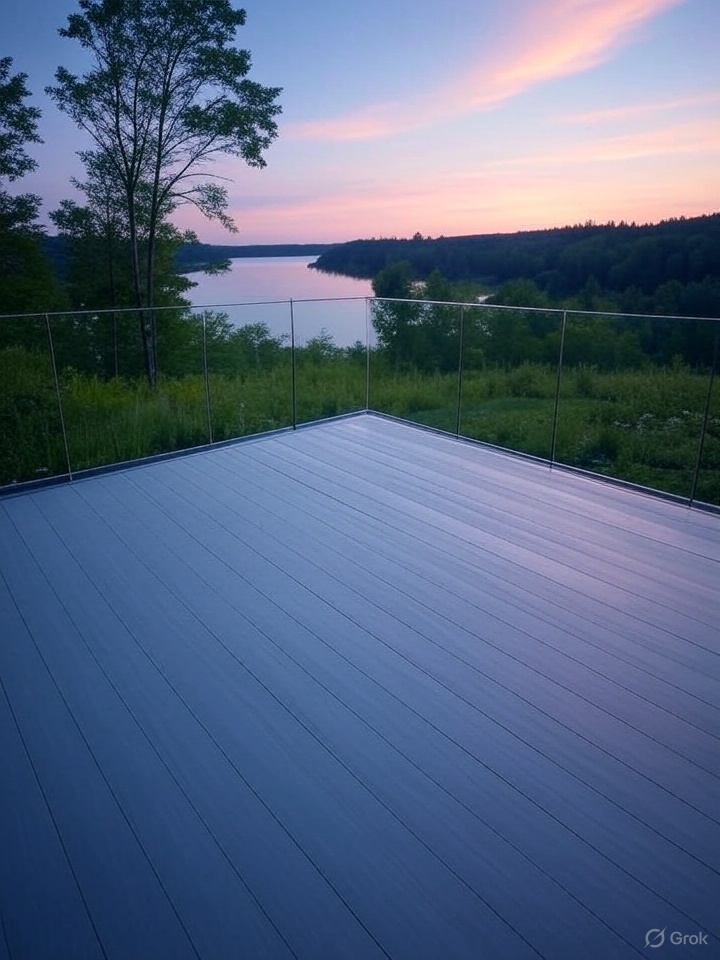
California Deck Railing Code Building a deck in Southern California requires adherence to the CBC and IBC code requirements; and also may consider other state requirements due to geo locations. Potential deck builds considerations include geo specific factors like coastal conditions, fire risks, and possible seismic activity during the design build process. Hillside decks may require something different than urban or commercial decks; while raised decks have different seismic requirements than ground level decks. Included in this article are some practical considerations and safety insights for California deck and railing projects: Guardrails and Deck Height Requirements Railings are mandatory for decks more than 30 inches above grade. If railings are installed on decks lower than 30 inches they are still required to meet code standards. The 30 inch threshold assumes the use of native grade. Adding loose fill will not exempt a homeowner or builder from a guardrail or permit requirement. We have witnessed the use of permitted retaining walls to satisfy this requirement on occasion because there are so many hillside decks in So Cal. Residential Deck Railing Height Minimum guardrail height is 42 inches in California. It has been rumored that this requirement will be making its way to other nearby states in the not so distant future. Commercial decks in California and multi-family buildings also require 42 inches for guardrails. The 42 inch height requirement is much safer; especially on elevated decks. Pro tip: Many customers are concerned about the sitting sight line at the taller height railing and losing the view- it has been our experience that the taller railing height is less of an issue than 36″ railing; and most deck seating allows for views through the infill or glass panels from deck chairs. Low profile and no top rail designs are also available. (photo below) NO TOP RAIL DESIGNS ON DECK RAILINGS ARE LEGAL IN CA. WHEN BUILDING CODE CONDITIONS ARE MET Deck Railing Infill Spacing Standards Openings in guardrails must not allow a 4 inch sphere to pass through, preventing children or pets from squeezing through. Cable railings will require 3″ minus spacing to achieve this; as well as adequate tension and post spacing. For stairs a 6″ sphere is allowed between the tread, riser, and bottom rail or cable. Bottom rail designs allow a sweep space of 4 inches or less. Cable railing systems and glass panel railings are code compliant in the state of California. San Diego Cable Railings offers a number of pre-made and custom railing options, kits, and DIY products for decks. With our products you can maximize your views and update your aesthetics without sacrificing safety or code compliance. San Diego Railings for Code Compliant Decks Our company and installation team has been constructing the highest quality transparent railing systems in Southern California since 2009. Our products are corrosion resistant, attractive, and proven in real field conditions. We’ve passed countless inspections for homeowners, contractors, and commercial building owners. If you’re looking to upgrade your home or business with new railings, give us a call or visit our quote request form. CLICK HERE TO REQUEST A QUOTE FROM OUR SALES TEAM! most used cable railing system Deck Railing Code Insights MavenAugust 7, 2025 Safe Deck Railings Pony Wall Railing Remodels MavenJuly 24, 2025 Cable Railing News What is the Best Material for Cable Railings? Cole RouseJuly 16, 2025 Cable Railing News Understanding Cable Railing: Addressing Potential Disadvantages Cole RouseJuly 16, 2025 most used cable railing system The Sleekest Minimalist Railing Systems MavenJuly 3, 2025 Browse More Posts Add Your Heading Text Here

Popular Minimalist Design Styles When it comes to modern home builds and remodeling styles for decks and stairways; cable railing systems avoid ornate detailing and offer clean straight lines. There are few more minimalistic ways to get aesthetics and durability in the same package. The added benefit of extreme transparency and a cost base lower than glass make these systems almost unbeatable. Open Air Spaces and Functional Beauty Open spaces are one of the most popular trends in home remodeling today. We are often removing walls or cutting them down considerably to offer a more open feel in tight spaces. Outdoor applications also yearn for open feel designs to enlarge smaller yards, and enhance views. How do we do this without losing function and safety? We do it with sturdy and minimalist steel frames, low profile top rails, and thin stainless steel cables. The most functionally beautiful railing systems with the sturdiness factor of the walls we remove to build them. Minimalist Stairs and Architectural Integration Mono stringer stairways and open stringer staircases attempt to offer a “floating” aesthetic which has become a design feature in many of the modern builds we visit. When it comes to these stair types; there are few choices suitable to accent this type of architecture. Stainless cable railings systems and thin low profile glass railings are the modern choice for mono stringer stairs and floating staircases. Options for mounting are plentiful via railing posts, pegs, stanchions, and shoe mounted railing systems. Both options provide safety for the user without sacrificing views and providing the ultimate style for low profile stairs. Material choices for minimalist railing systems are most commonly steel, aluminum, stainless steel, and hardwood species that are strong enough to support tension from cables, and weight from heavy duty glass panels. These materials are sturdy and resist corrosion, as well as easily coated with paint or powder. High grade stainless steel can even be bare finished or polished and left unfinished in the toughest conditions Minimalist Railing Safety and Code Compliance Cable railing systems and glass panel railings are code compliant in the state of California. San Diego Cable Railings offers a number of pre-made and custom railing options, kits, and DIY products for minimalist railings. With our products you can maximize your views and update your aesthetics without sacrificing safety. Best Choice in San Diego for Minimalist Railings Our company and installation team has been constructing the highest quality minimalist railing systems in Southern California since 2009. We’ve passed countless inspections for homeowners, contractors, and commercial building owners. If you’re looking to upgrade your home or business with new railings, give us a call or visit our quote request form. CLICK HERE TO REQUEST A QUOTE FROM OUR SALES TEAM! most used cable railing system The Sleekest Minimalist Railing Systems MavenJuly 3, 2025 Cable Railing News What are the disadvantages of stainless steel railings? Cole RouseJune 24, 2025 most used cable railing system Single Tensioner Cable Railing Systems MavenJune 9, 2025 Glass Railing Codes, Modern Deck Railings, Stainless Steel vs. Aluminum Building Safer Stairs MavenMay 19, 2025 Glass Railing Codes, Modern Deck Railings, Stainless Steel vs. Aluminum Glass Spigots and Stanchions Code Compliance MavenApril 29, 2025 Browse More Posts Add Your Heading Text Here
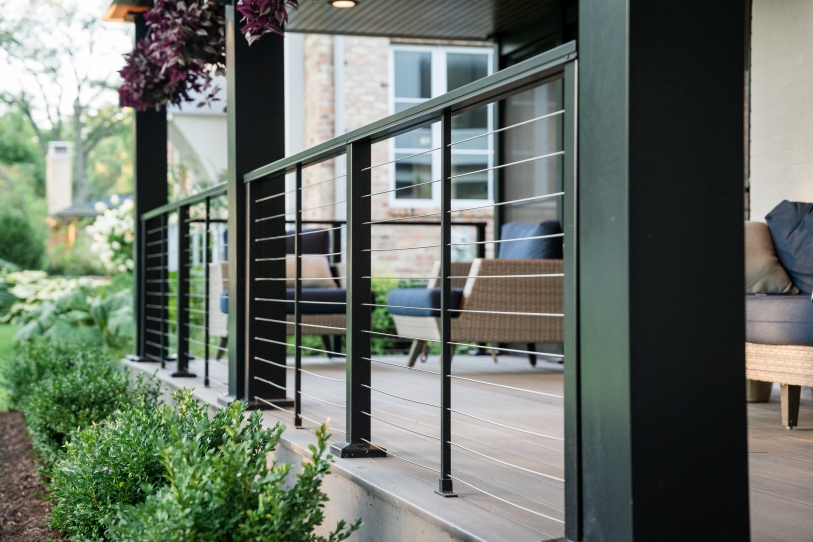
Classic Cable vs. Single Tensioner Traditional cable railing systems utilize a single tensioner at each cable location typically at one or both ends of the railing frame. Single tensioner cable railing systems feature a single cable running through all of the railing posts and tensioned from a single point inside an end post. The main premise to the single tensioner system is to minimize hardware, tools, and simplify installation. Most of these types of systems are utilized for level deck railings and can be found at big box retail outfits. Installation Process Similarities and Differences Standard cable railing systems are installed a cable at a time; each cable having it’s own fitting. Single tensioner cable railings are threaded through all the posts and anchored on one end; then tensioned from a single point. The single tensioner system contains less parts due to its design which is where it shines and could also save time in certain situations. Additionally, minimal tooling is needed. The drawbacks however can be substantial and very unforgiving when these systems are misaligned causing difficulty tensioning the entire system. Complex layouts can greatly affect cable routing and successful tensioning and installation can require more skill for DIY installers. Cost Comparison-Single Tensioner vs. Traditional Cable Railing Systems Lower material costs are on every remodelers mind and railing costs for high quality systems can be high in comparison to standard picket rails and traditional options. Single tensioner systems attempt to lower costs with less fittings and potentially lower labor costs. In some situations users will actually experience the opposite reaction; as any complex set up is problematic. The lower labor cost scenario will rarely apply outside of a simple straight run of cable. The single tensioner set up will of course be less expensive for shorter linear designs. Classic cable railing with individual tensioners will require more fittings and possibly more labor; however installation is much more straightforward and versatility abounds with classic systems. What About Maintenance Costs? As even the lowest maintenance railings require care over time we have to think about maintenance. Imagine the implications of a single tensioner vs individual tensioner system if a repair is needed. Single tensioner systems are much less reliable and more difficult to repair or maintain; especially in tough conditions or high load dynamic environments. Look at the photo below; this is one of many frequently encountered custom applications and our railings seamlessly adapt here with classic components. Performance and Durability Our team of professionals at SDCR consists of sales and fabrication pro’s and railing contractors.We assist our customers with cable railing design and code compliant products for the highest performance. Our preferred installers have built thousands of railings since 2006, while testing our products in some of the harshest environmental conditions. Below is a quick breakdown of performance and durability bullet points comparing the two systems: -Tensioning- consistency is much better with individual cables, Possible trouble shooting over time and/or repair is much easier with individual cables and classic cable railings. –Durability- Although stainless cable is very durable; a single tensioner is a potential failure point to compare vs. the benefit of convenience provided by these systems. Classic systems have been used in marine environments for decades. Single tensioner systems have not been proven yet over time. -Aesthetics- customers interested in minimal hardware may prefer single tensioner aesthetics although many of these systems require more posts and also larger post sizes due to aluminum construction. Aside from the possible cost savings in certain situations, the classic system outperforms in most applications. Single Tensioners and Custom Cable Railing Applications The versatility provided by individual tensioners and classic cable systems is unmatched by single tensioner systems. Corners and sloped applications increase friction and uneven tension which negates the benefit of a single tensioner. The best use case for these systems is a single linear run which is just not a common occurrence. Curves and stairs provide additional challenges for single tensioner systems. Classic cable railings excel in custom situations with precision and security. Code compliance is also easier due to independent tension, localized adjustment and true time tested proven results. If you have questions about which cable railing system will work best for you- click the button below and speak with one of our cable railing pros. CLICK HERE TO REQUEST A QUOTE FROM OUR SALES TEAM! most used cable railing system Single Tensioner Cable Railing Systems MavenJune 9, 2025 Glass Railing Codes, Modern Deck Railings, Stainless Steel vs. Aluminum Building Safer Stairs MavenMay 19, 2025 Glass Railing Codes, Modern Deck Railings, Stainless Steel vs. Aluminum Glass Spigots and Stanchions Code Compliance MavenApril 29, 2025 Laminated glass panel railing codes Laminated Glass Panel Railing Code Requirements MavenApril 9, 2025 curved railings Radius Railings MavenMarch 22, 2025 Browse More Posts Add Your Heading Text Here